
Step-by-Step Home Construction Process in Bangalore
For many homeowners, building a house in Bangalore is both exciting and overwhelming. Unlike buying a ready-made property, home construction involves multiple stages that require planning, approvals, technical coordination, and on-site execution. Understanding the construction process beforehand helps homeowners make informed decisions and avoid common pitfalls.
This guide explains the step-by-step home construction process in Bangalore, from initial planning to final handover, in a clear and practical manner.
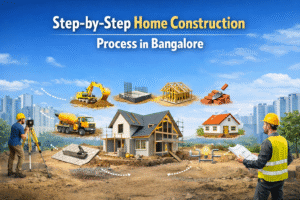
Step 1: Plot Assessment and Feasibility Study
The construction process begins with a detailed assessment of the plot. Factors such as plot size, orientation, access roads, soil condition, and local regulations influence what can be built and how it should be designed.
Soil testing is an important technical step at this stage. It helps determine the type of foundation required to safely support the structure. A proper feasibility study at the beginning reduces structural risks and design changes later.
Step 2: Design Planning and Layout Finalization
Once feasibility is confirmed, architectural planning begins. This stage focuses on space utilization, ventilation, natural light, privacy, and future requirements. Floor plans, elevations, and basic 3D views are usually developed to help homeowners visualize the house.
Parallel to architectural design, structural planning is carried out to ensure the building can safely handle loads such as slabs, beams, and columns. Coordination between design and structure is essential to avoid execution issues on site.
Step 3: Approvals and Legal Clearances
Before construction starts, required approvals must be obtained from local authorities such as BBMP or relevant planning bodies, depending on the plot location. These approvals are based on zoning rules, setbacks, height restrictions, and floor area regulations.
Experienced home construction companies in Bangalore help homeowners navigate this process by preparing drawings and documentation as per local guidelines, reducing delays caused by compliance issues.
Step 4: Site Preparation and Foundation Work
After approvals, the site is prepared for construction. This includes clearing the plot, setting out the building layout, and marking foundation lines accurately.
Foundation work begins based on soil test recommendations and structural design. Excavation, reinforcement placement, and concreting are carried out with strict attention to levels and alignment. Since the foundation supports the entire structure, quality control at this stage is critical.
Step 5: Structural Construction (Skeleton Stage)
This stage involves building the structural framework of the house—columns, beams, slabs, and staircases. Construction progresses floor by floor, with reinforcement checks and concreting at each level.
Stage-wise inspections during structural work help ensure strength and durability. Proper curing after concreting is also essential to achieve the desired structural performance.
Step 6: Brickwork and Internal Partitioning
Once the structure is complete, brickwork begins to define rooms and internal spaces. Wall thickness, alignment, and openings for doors and windows are carefully maintained as per drawings.
This stage also allows homeowners to experience the actual spatial layout of the house, making it easier to visualize room sizes and circulation.
Step 7: Electrical, Plumbing, and Internal Services
Electrical conduits, plumbing lines, and other internal services are installed within walls and slabs. Proper planning at this stage prevents future maintenance issues and avoids unnecessary wall breaking later.
Coordination between service layouts and architectural plans is important to ensure functionality and safety.
Step 8: Plastering, Flooring, and Finishing Works
Plastering provides a smooth and even surface for walls and ceilings. Flooring, tiling, painting, and fixture installation follow based on material selections made earlier.
Finishing quality plays a major role in the final appearance of the house. Attention to detailing at this stage enhances both aesthetics and long-term usability.
Step 9: Final Inspection and Handover
Before handover, a final inspection is conducted to check workmanship, service functionality, and overall finish. Any pending corrections are addressed before the house is ready for occupation.
Professional construction teams follow a checklist-based handover process to ensure all stages have been completed as planned.
A Structured Construction Approach in Practice
Companies like BuilderBro follow a structured home construction process that emphasizes planning clarity, technical coordination, and disciplined execution at each stage. By aligning design, approvals, and on-site workflows, such an approach helps reduce delays and ensures consistent quality throughout the project.
This process-driven mindset reflects the evolving expectations of homeowners seeking reliability from home construction companies in Bangalore.
Building with Awareness and Confidence
Understanding the step-by-step home construction process in Bangalore empowers homeowners to participate more confidently in their building journey. Knowing what happens at each stage helps set realistic expectations around timelines, costs, and quality.
Working with construction partners who follow a systematic and transparent approach can make the experience smoother and more predictable. Firms like BuilderBro, which prioritize structured execution and professional coordination, align well with the needs of modern home builders.